
How to Prevent Common BJJ Injuries: A Trainer's Guide to Protecting Your Students
Learn proven BJJ injury prevention strategies. Discover the 5 most common jiu jitsu injuries and how coaches can protect students with proper technique and training protocols.
Share this page
Ready to Track Your Progress?
Join practitioners who log their sessions and see real improvement.
Brazilian Jiu-Jitsu transforms lives. It builds confidence, forges community, and develops mental toughness like few other pursuits can. But here's a reality every gym owner and coach must face: BJJ injury prevention isn't just about keeping your students healthy--it's about keeping them on the mat long enough to experience that transformation.
The statistics are sobering. Research published in the Orthopaedic Journal of Sports Medicine found that 45.7% of BJJ injuries affect the lower extremities, with knees bearing the brunt of the damage. Add shoulder injuries, neck strains, and the notorious "grappler's finger," and you have a sport where proper injury prevention isn't optional--it's essential.
This comprehensive guide delivers evidence-based strategies for preventing the most common jiu jitsu injuries. Whether you manage a 500-member academy or train a small group of dedicated practitioners, these protocols will help you build a safer training environment while reducing your liability exposure.
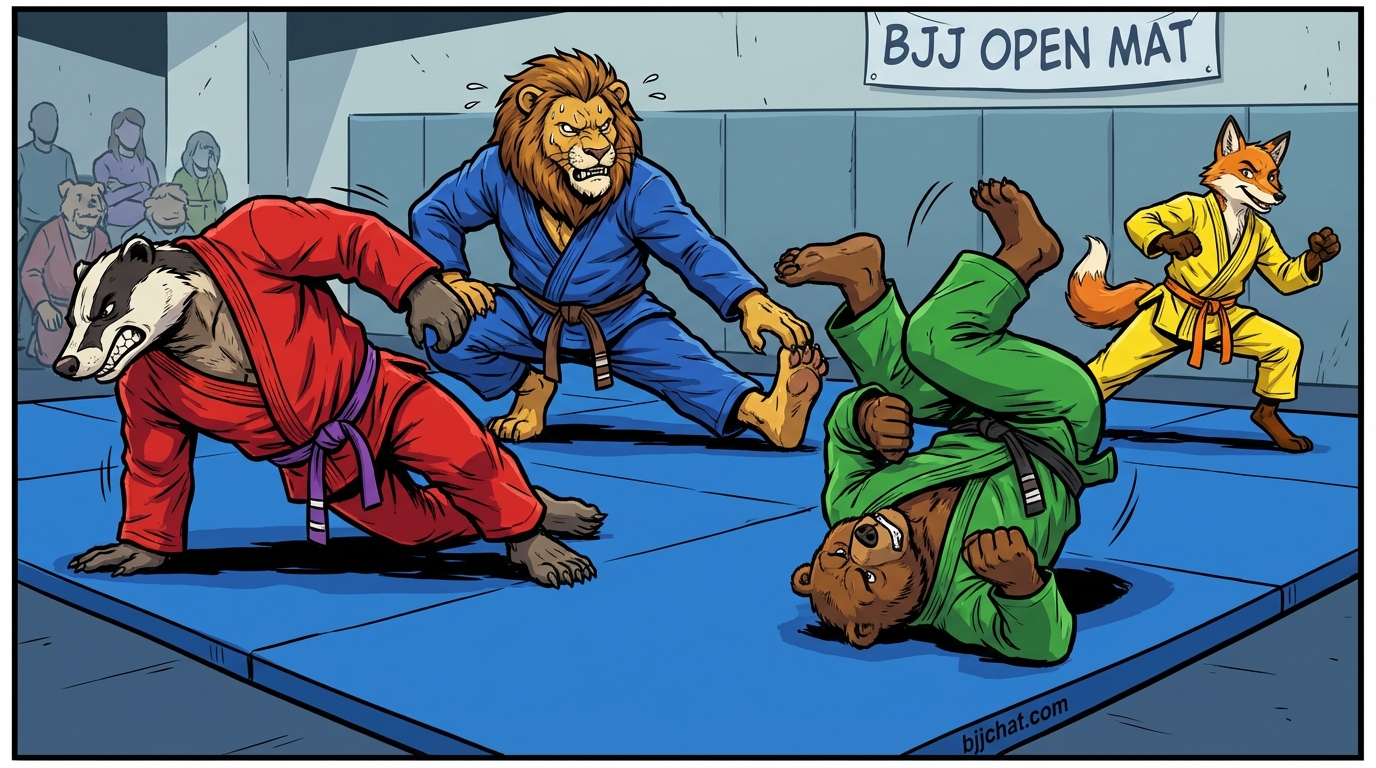
The 5 Most Common BJJ Injuries (and How to Prevent Them)
Understanding injury patterns is the first step toward prevention. Let's examine the injuries that sideline the most practitioners and the specific protocols that prevent them.
1. Knee Injuries: The Silent Career-Ender
How to prevent knee injuries in jiu jitsu starts with understanding why knees are so vulnerable. The knee joint withstands tremendous rotational forces during guard work, takedowns, and submission escapes. ACL tears, MCL sprains, and meniscus damage account for a significant portion of long-term BJJ injuries.
Prevention Protocol:
-
Strengthen supporting muscles: Implement pre-class exercises targeting the quadriceps, hamstrings, and hip stabilizers. Bulgarian split squats and single-leg Romanian deadlifts build functional strength that protects the knee joint during dynamic movements.
-
Teach proper falling mechanics: Many knee injuries occur during takedowns when practitioners land with locked legs. Drill breakfalls that emphasize landing with bent knees and rolling through impact.
-
Address heel hooks progressively: The reaping and heel hook positions create extreme knee torque. Establish clear belt-level restrictions and ensure students understand when to tap before damage occurs.
-
Monitor training intensity: Fatigued muscles provide less joint stabilization. Schedule knee-intensive drilling early in class when students have fresh legs.
Warning signs to watch for: Students favoring one leg, hesitation during guard recovery, or complaints of instability during lateral movement. Early intervention prevents minor strains from becoming major tears.
2. BJJ Shoulder Injury Prevention
The shoulder's remarkable mobility comes at the cost of stability. Kimuras, americanas, and omoplatas exploit this vulnerability, making BJJ shoulder injury prevention a top priority for every coach.
Prevention Protocol:
-
Build rotator cuff resilience: External rotation exercises with bands, face pulls, and prone Y-T-W raises strengthen the small muscles that stabilize the glenohumeral joint.
-
Teach controlled submission application: Emphasize the "catch and release" mentality during drilling. Students should apply shoulder submissions slowly enough for partners to tap without injury.
-
Practice proper defensive postures: Many shoulder injuries occur when practitioners post an arm behind them or reach overhead while being swept. Drill keeping elbows tight to the body during sweeps and scrambles.
-
Address existing mobility issues: Students with limited shoulder mobility are at higher risk during submission defense. Screen new students and provide appropriate modifications.
Joint protection considerations: Students returning from shoulder injuries should avoid positions that place the shoulder in extreme external rotation until strength and mobility are fully restored. BJJChat's injury tracking features help coaches monitor which students need modified training.
3. Neck Injuries in Grappling
The cervical spine endures significant stress during stacking passes, guillotines, and certain takedowns. Neck injuries grappling scenarios often develop slowly from accumulated trauma before manifesting as acute problems.
Prevention Protocol:
-
Strengthen the neck progressively: Neck bridges (front and back), resistance band exercises, and manual resistance training build the muscular support that protects vertebrae.
-
Eliminate dangerous stacking: Establish clear rules about folding opponents past 90 degrees. Modern competition rule sets increasingly penalize dangerous stacks for good reason.
-
Teach proper posture during guard work: A neutral spine position reduces compression forces. Students should maintain chin-tucked posture rather than looking up when in closed guard.
-
Address guillotine defense immediately: Guillotine escapes should be among the first submissions students learn to defend. The panicked "pull back" response often causes more cervical strain than the choke itself.
Conditioning prevents injury: Regular neck strengthening reduces strain during training. Include 5-minute neck conditioning blocks in your warm-up routine twice weekly.
4. Finger Injuries in Submission Training
Finger injuries submission training creates through repeated gi gripping represent one of BJJ's occupational hazards. While often dismissed as minor, chronic finger problems can significantly impact quality of life outside the gym.
Prevention Protocol:
-
Teach grip fighting fundamentals: Students who rely on death grips sustain more finger injuries than those who understand when to release and re-grip. Grip fighting should be a core curriculum component.
-
Implement gi-free training days: No-gi sessions give fingers recovery time while developing alternative control methods that translate back to gi training.
-
Provide tape and bracing guidance: Proper buddy taping technique prevents many finger injuries. Stock athletic tape in your gym and demonstrate correct application during fundamentals classes.
-
Address finger pain early: Students ignoring finger pain often develop chronic conditions. Create a gym culture where reporting minor injuries is encouraged, not stigmatized.
Recovery timeline note: Finger injuries heal slowly due to limited blood supply. Set realistic expectations--even minor sprains may require 4-6 weeks of modified training.
5. Cauliflower Ear and Impact Injuries
While not career-ending, ear trauma, facial abrasions, and impact injuries affect student retention. New practitioners particularly struggle when these injuries feel overwhelming.
Prevention Protocol:
-
Require headgear for at-risk students: Make ear guards mandatory for students with early cauliflower development. Stock loaners in your pro shop.
-
Maintain clean, properly padded training surfaces: Blue mat backgrounds in your photos show well-maintained facilities. Ensure reality matches marketing--check mat spacing, wall padding, and surface cleanliness daily.
-
Trim nails before rolling: Make nail length part of your hygiene protocol. One scratched cornea can result in liability issues far exceeding the awkwardness of enforcement.
Mat safety standards should be documented and reviewed monthly. BJJChat's facility management tools help track maintenance schedules and inspection dates.
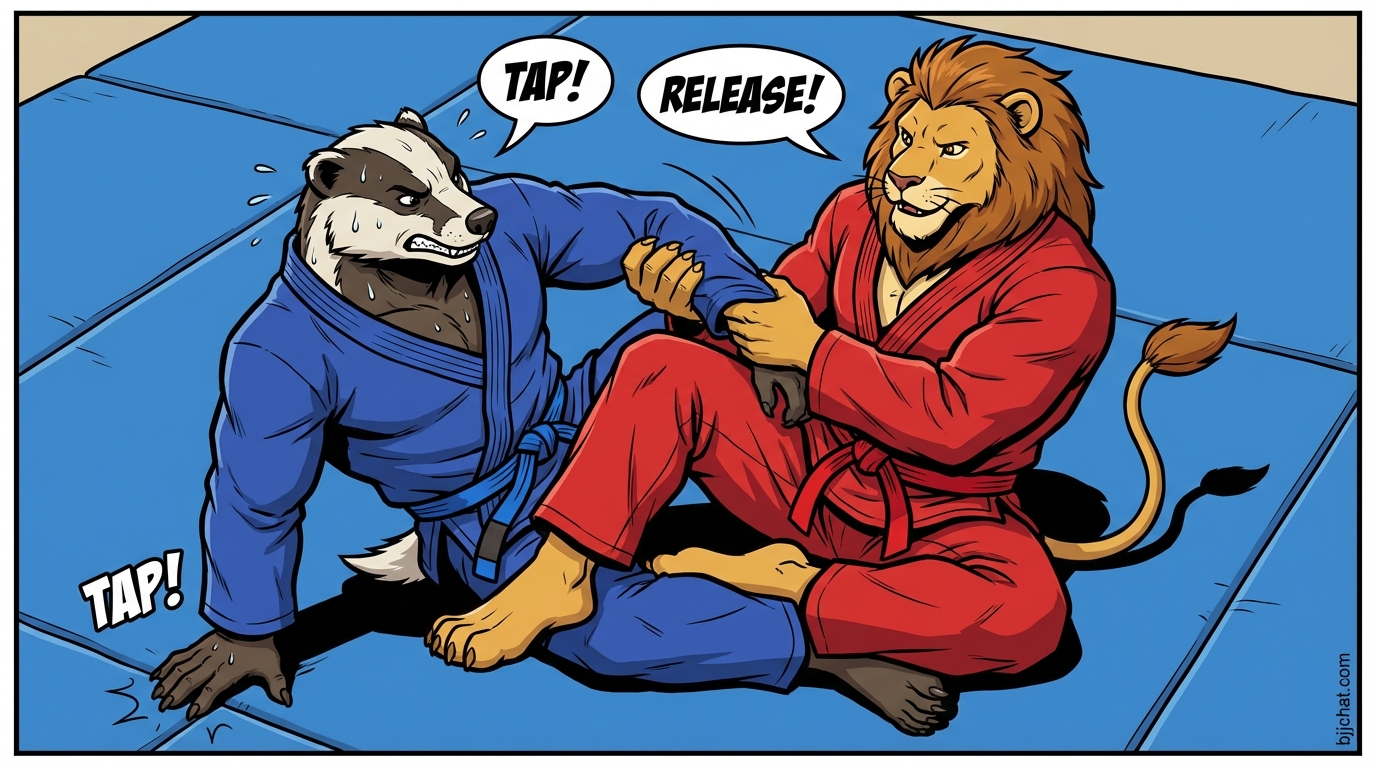
Injury Prevention Drills
Prevention isn't passive--it requires active training. These mobility exercises and strength training for injury prevention protocols can be integrated into your regular class structure.
Pre-Class Dynamic Warm-Up (10-12 Minutes)
A proper warm-up routine prepares joints and muscles for the specific demands of BJJ:
Minutes 1-3: General Movement
- Light jogging/lateral shuffling around the mat
- High knees with arm circles
- Butt kicks with shoulder rolls
Minutes 4-6: Hip Mobility Sequence
- Hip circles (both directions)
- World's greatest stretch with rotation
- Cossack squats (8 per side)
- Duck walks forward and backward
Minutes 7-9: BJJ-Specific Movement
- Technical stand-ups (10 each side)
- Granby rolls (5 each direction)
- Hip escapes (full mat length)
- Forward/backward shoulder rolls
Minutes 10-12: Light Partner Drills
- Guard replacement flow (no resistance)
- Standing grip fighting (50% intensity)
- Guard pull to stand-up cycling
Injury Prevention Strength Circuit (Weekly Implementation)
Assign this 15-minute circuit as homework or dedicate one class per week:
Circuit A - Lower Body Protection (2 rounds)
- Goblet squats x 12
- Single-leg Romanian deadlifts x 8 per side
- Lateral band walks x 10 per direction
- Terminal knee extensions x 15 per leg
Circuit B - Upper Body Protection (2 rounds)
- Band pull-aparts x 20
- External rotation with band x 12 per arm
- Push-ups with plus (scapular protraction) x 10
- Prone Y-T-W raises x 8 each
Circuit C - Core and Neck (2 rounds)
- Dead bugs x 10 per side
- Side planks x 30 seconds per side
- Neck flexion/extension against resistance x 10 each
- Neck lateral flexion with hand resistance x 8 each direction
Cool-Down Stretching Protocol (5-7 Minutes)
Cool-down stretching reduces muscle tension and maintains the flexibility required for BJJ:
- Figure-four hip stretch (90 seconds per side)
- Cross-body shoulder stretch (60 seconds per side)
- Kneeling hip flexor stretch (60 seconds per side)
- Seated forward fold (90 seconds)
- Child's pose with lateral reach (60 seconds per side)
Creating a Culture of Safe Rolling
Controlled rolling environments don't happen by accident. They require deliberate culture-building and consistent enforcement.
Partner Communication Standards
Teach and enforce clear communication with partners protocols:
-
Pre-roll agreements: Partners should briefly discuss intensity level, any injuries, and areas to avoid before every round.
-
Tap early, tap often: Create a gym culture where tapping is celebrated as intelligent training, not weakness. Coaches should publicly tap during demonstrations.
-
Check-in during rolls: "Are you okay?" after hard scrambles or awkward positions should be standard practice, not an exception.
-
Post-roll feedback: Encourage partners to briefly discuss what felt good and what felt dangerous after each round.
Intensity Management by Belt Level
Form over intensity is easier to teach when you have clear guidelines:
White Belts (First 6 months):
- Specific training only (start from positions, work escapes)
- 50-60% intensity maximum
- No leg locks or neck cranks
- Mandatory rest rounds between rolls
Blue Belts:
- Full rolling permitted with intensity matching partner
- Straight ankle locks introduced
- Must demonstrate submission control before catching advanced students
Purple Belts and Above:
- Full rule set available
- Expected to reduce intensity when rolling with lower belts
- Responsible for stopping rolls if safety concerns arise
Recognizing Signs of Overtraining
Signs of overtraining that coaches should monitor:
- Decreased performance despite consistent training
- Persistent fatigue that doesn't resolve with rest
- Increased minor injuries and slow healing
- Mood changes: irritability, depression, anxiety
- Sleep disturbances
- Loss of motivation
When students should take rest days: Create clear guidelines about mandatory rest after competitions, during illness, and when injury recovery timeline protocols require modified training.
Managing Training Intensity During Competition Prep
Competition preparation often increases injury risk due to elevated intensity. Implement these safeguards:
- Scheduled light days: Even during peak training, include 2-3 reduced-intensity sessions weekly
- Recovery protocol enforcement: Mandatory rest periods between hard sparring sessions
- Weight management monitoring: Aggressive cuts increase injury risk through dehydration and fatigue
- Mental stress recognition: Competitive pressure can lead to aggressive training that injures partners
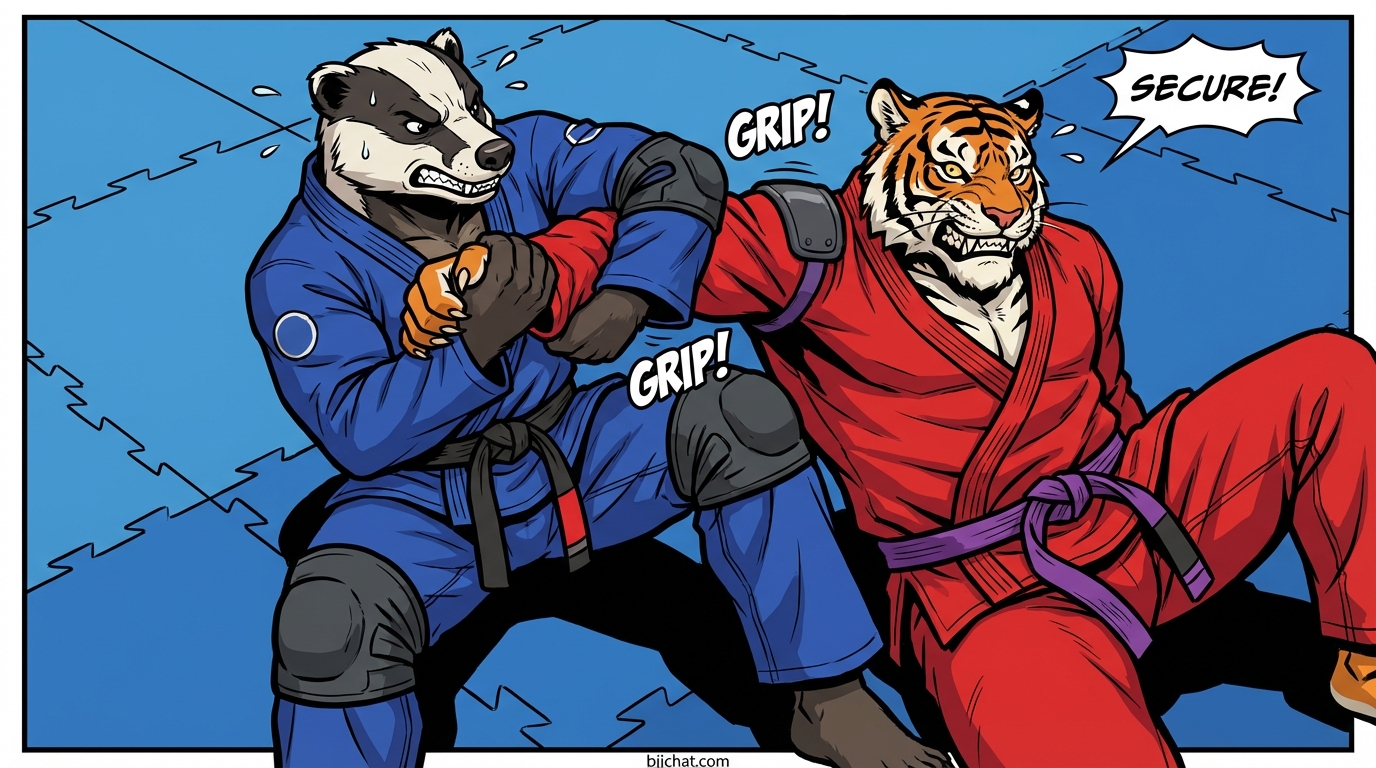
When Students Should Take Rest Days
Knowing your limits and respecting them separates practitioners who train for decades from those who burn out in years. Coaches must educate students on appropriate rest protocols.
Mandatory Rest Indicators
Students must rest when experiencing:
- Any joint pain that doesn't resolve within 24 hours
- Concussion symptoms (even suspected)
- Fever or systemic illness
- Sleep deprivation (less than 5 hours)
- Extreme life stress affecting focus
Active Recovery Days
Not all rest must be passive. Physical therapy exercises and recovery activities that support BJJ without creating additional stress:
- Swimming or light pool work
- Yoga or structured mobility sessions
- Walking or light cycling
- Foam rolling and massage
- Breathing exercises and meditation
Return to Rolling After Injury
Return to rolling after injury requires graduated progression:
Week 1 post-clearance:
- Drilling only, 50% intensity
- Avoid movements that stress the injured area
- Ice and compression treatment after each session
Week 2:
- Light specific training with trusted partners
- 60-70% intensity
- Continue protective measures
Week 3:
- Progressive return to normal training
- Full intensity only if pain-free
- Monitor for compensation patterns
Injury Rates by Belt Level
Understanding injury rates by belt level helps target prevention efforts:
White Belts: Highest injury rate due to unfamiliarity with positions and submissions. Focus on teaching when to tap and how to move safely.
Blue Belts: Injury rate decreases but remains elevated. Often caused by attempting techniques beyond current skill level.
Purple Belts: Lowest injury rate among colored belts. Technical efficiency reduces exposure to dangerous positions.
Brown/Black Belts: Moderate injury rate, often from accumulated wear or training with less experienced partners who move unpredictably.
Building Long-Term Sustainability
Sustainable BJJ practice requires long-term thinking:
- Jiu jitsu safety isn't about avoiding training--it's about training smarter
- Practitioners who train 3 times weekly for 10 years progress further than those who train daily for 3 years before burning out
- Recovery is part of training, not an obstacle to it
- Proper technique prevents injury better than any protective equipment
Implementing These Protocols in Your Academy
Knowing these principles is only valuable if you implement them consistently. Here's how to systematize injury prevention in your gym:
Documentation and Tracking
Maintain records of:
- Student injuries (date, type, circumstances, recovery time)
- Near-miss incidents that could have caused injury
- Equipment maintenance and inspections
- Warm-up and conditioning protocol compliance
BJJChat's curriculum and training management features help gym owners track class content, student progress, and injury patterns across their entire membership base. When you can see which techniques correlate with injuries, you can adjust your teaching accordingly.
Staff Training and Accountability
Your coaches are your first line of defense:
- Include injury prevention in all instructor training
- Review injury reports monthly with your coaching team
- Empower coaches to stop unsafe behavior immediately
- Model proper behavior--coaches should tap when caught
Communication with Students
Proactive communication prevents injuries:
- Include safety expectations in new member orientations
- Post injury prevention guidelines prominently in your gym
- Address unsafe behavior immediately and directly
- Celebrate students who train intelligently over those who train recklessly
Liability Considerations
Proper injury prevention protects your business:
- Document all safety protocols and training
- Maintain appropriate liability waivers (consult legal counsel)
- Carry adequate insurance coverage
- Respond appropriately to injuries when they occur
Conclusion: Building a Safer BJJ Community
BJJ injury prevention isn't about wrapping students in bubble wrap or eliminating the martial art's essential nature. It's about creating environments where practitioners can challenge themselves appropriately while minimizing unnecessary risk.
Every injury prevented means more mat time. More mat time means more growth, more community, and more of the transformation that makes BJJ special.
As a gym owner or coach, you set the tone. When you prioritize proper submission technique, enforce partner control, and build systems for conditioning prevents injury protocols, you create an academy where students can train hard and train long.
The strategies in this guide represent current best practices drawn from sports science research, injury statistics, and the collective wisdom of experienced practitioners. Implement them progressively, adapt them to your specific context, and watch your students thrive.
Ready to implement systematic injury prevention in your academy? BJJChat's gym management platform helps you track attendance, monitor training loads, and identify injury patterns before they become problems. Start your free trial today and discover how data-driven training management keeps your students safer on the mat.
About the Author

BJJChat Team
VariousEditorial Team
The BJJChat editorial team is a collective of Brazilian Jiu-Jitsu practitioners, coaches, and enthusiasts dedicated to sharing knowledge and helping the BJJ community grow. With combined experience spanning decades of training across multiple academies worldwide, our team produces content on platform updates, training tools, community features, and general BJJ tips. We are passionate about making quality BJJ education accessible to everyone, from white belts just starting their journey to experienced competitors looking to refine their game.
Ready to Track Your Progress?
Join practitioners who log their sessions and see real improvement over time.
Start Tracking

