
Your First BJJ Class: What to Expect as a Complete Beginner
Nervous about your first BJJ class? Discover what to wear, what to expect, and how to prepare. Every black belt started where you are - begin your journey today.
Share this page
Ready to Track Your Progress?
Join practitioners who log their sessions and see real improvement.
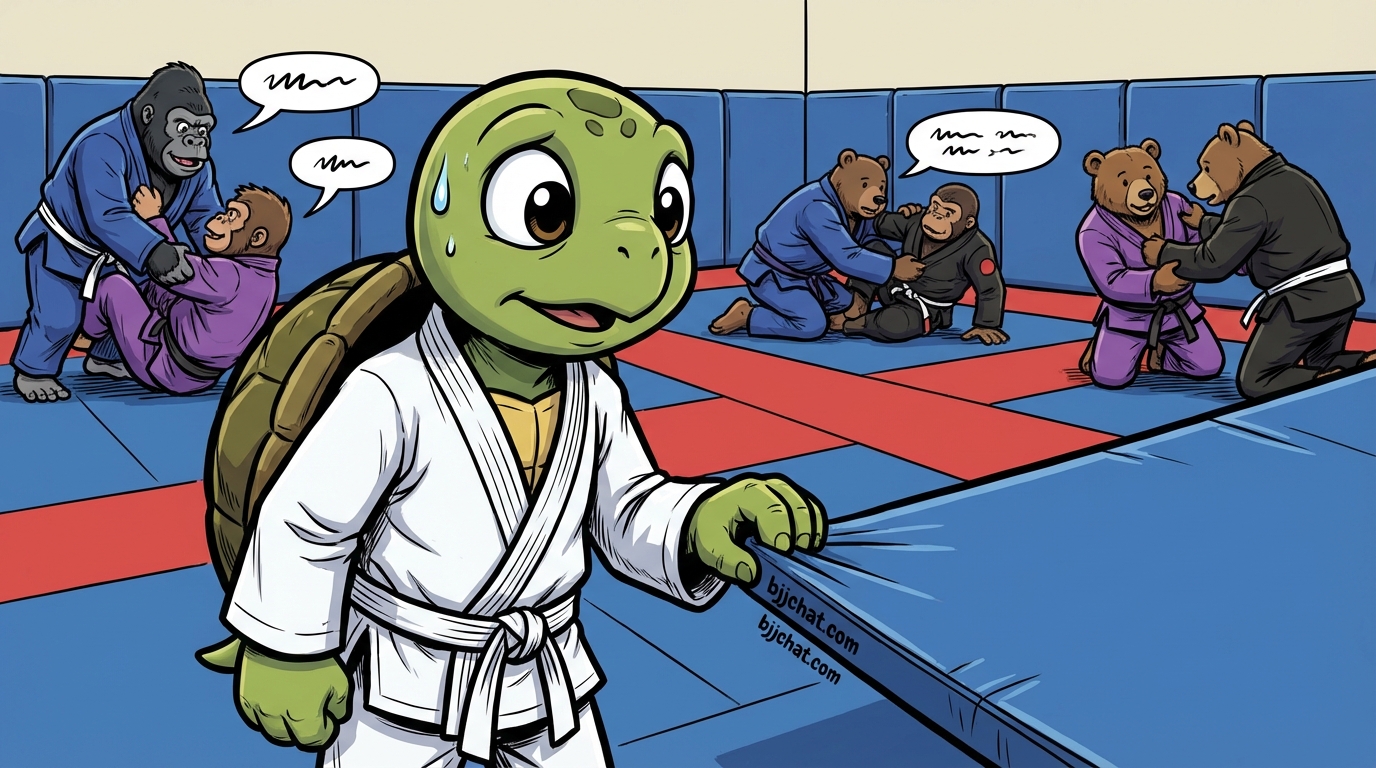
Your palms are sweaty. You have watched approximately 47 YouTube videos about Brazilian jiu-jitsu. You have driven past the gym three times. Sound familiar? If you are reading this, you are probably working up the courage to walk through those doors for your first BJJ class—and that nervous energy you are feeling is completely normal.
Here is the truth that every black belt on the planet knows: every single person who trains jiu-jitsu was once exactly where you are right now. That intimidating purple belt who moves like water? She spent her first class getting tangled in her own gi sleeves. The instructor who makes submissions look effortless? He showed up for his first class not knowing which way to tie his belt.
Your first BJJ class will be confusing, exhausting, and humbling. It will also be the beginning of something that might just change your life.
Before You Arrive: Setting Yourself Up for Success
Walking into your first BJJ class prepared will ease some of that first-day anxiety. Here is what you need to know before you step on the mats.
What to Wear
Most gyms offer a trial class where you can train without a gi (the traditional uniform). Wear comfortable athletic clothing—compression shorts or leggings and a fitted t-shirt or rash guard work perfectly. Avoid anything with pockets, zippers, or loose fabric that could catch fingers and toes.
If the gym requires a gi for your first class, many academies will loan you one. Call ahead to confirm. When you eventually purchase your own gi, expect to spend between $50 and $150 for a quality beginner uniform.
What to Bring
Pack a small gym bag with:
- A water bottle (you will need it)
- A small towel
- Flip-flops or sandals for walking off the mat
- A change of clothes if you prefer to shower at the gym
- Any required paperwork or waiver forms
Hygiene Matters
This deserves its own section because it matters more than you might think. BJJ involves close contact with training partners, and good hygiene is a sign of respect for everyone on the mats.
Before class: shower, trim your fingernails and toenails, remove all jewelry, and tie back long hair. If you have any open cuts or skin issues, cover them with tape or bandages. Coming to class clean is one of the most important ways to be a good training partner.
Walking Through the Door
You made it. You parked the car, walked across the parking lot, and now you are standing in the doorway of a BJJ academy. What happens next?
Most gyms have a front desk or waiting area. Introduce yourself and let them know it is your first class. Someone will likely give you a quick tour, explain gym rules, and show you where to change. Every gym has slightly different etiquette, but a few universal rules apply:
- Always bow or acknowledge when stepping onto and off the mat
- Shake hands with your training partners before and after rolling
- If you need to step off the mat for any reason, let your partner or the instructor know
- Address instructors respectfully (Professor, Coach, or their preferred title)
Do not be afraid to ask questions. Every person at that gym was new once, and most practitioners genuinely enjoy helping beginners.
The Warm-Up: More Challenging Than You Expected
Here is something nobody warns you about: the warm-up alone might be one of the hardest physical experiences of your life.
BJJ warm-ups typically include running, stretching, and movements specific to grappling—shrimping, bridging, technical stand-ups, forward and backward rolls. These movements feel awkward and unnatural at first. You will probably shrimp in the wrong direction. Your forward roll might look more like a controlled fall. This is completely normal.
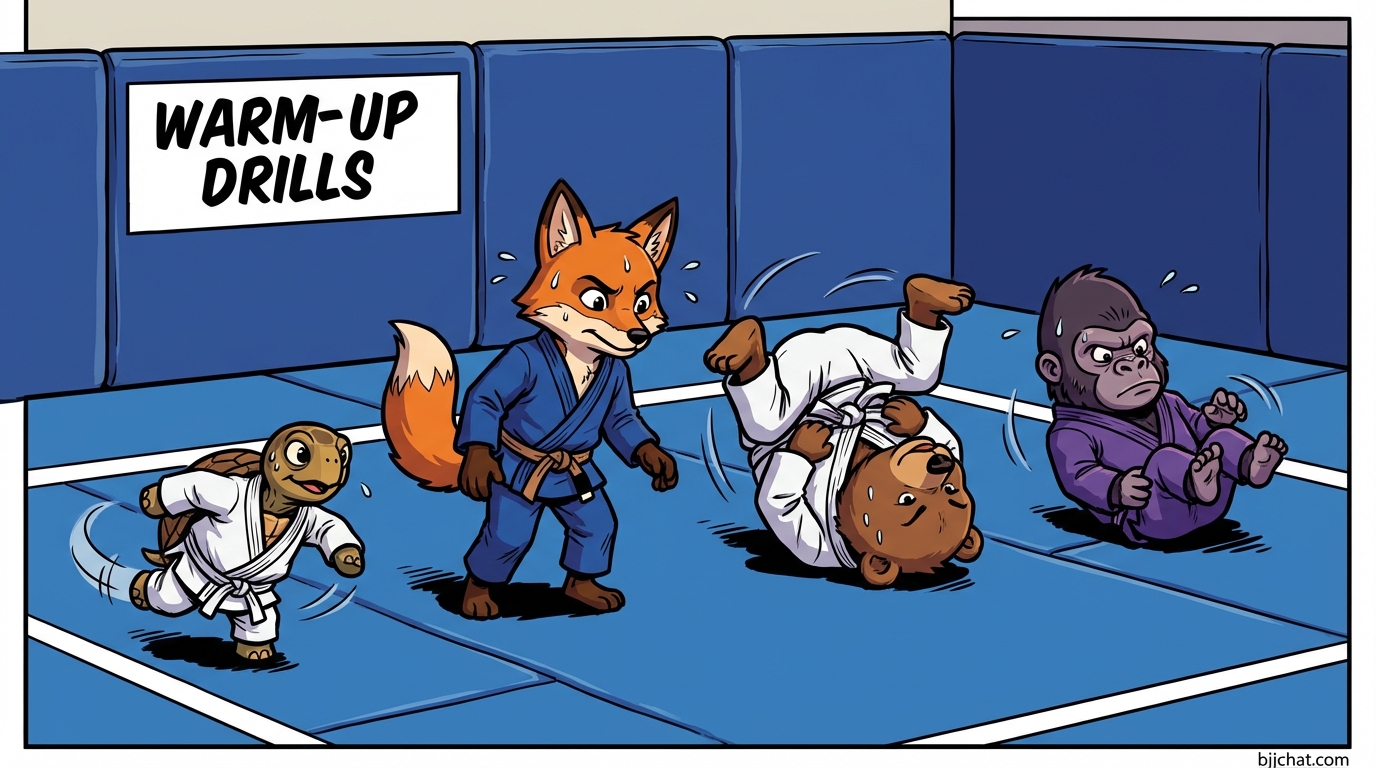
The warm-up serves two purposes: it prepares your body for training and builds the movement patterns you will use constantly in jiu-jitsu. That weird shrimping motion? It is actually an escape that will save you from countless bad positions. The technical stand-up? A fundamental skill for getting back to your feet safely.
Pace yourself. It is okay to take breaks. Nobody expects you to keep up with students who have been training for years. Focus on attempting the movements rather than perfecting them.
Learning Your First Techniques
After the warm-up, the instructor will demonstrate techniques—usually two or three related movements that build on each other. This is where BJJ starts to feel like learning a new language.
The instructor might show a guard pass, a sweep, or a submission. You will watch closely, trying to absorb every detail. Then you will pair up with a partner and attempt to replicate what you just saw. Spoiler: it will not look the same when you try it. Techniques are organized in a structured curriculum that builds skills progressively.
Do not panic. Here is what to expect:
You will forget steps. The instructor showed six details, and you remember two. This happens to everyone. Ask your partner, raise your hand for help, or simply do your best approximation.
Your body will not cooperate. Your brain knows what to do, but your limbs have other ideas. Coordination comes with repetition. Be patient with yourself.
It feels like nothing is working. Your training partner (hopefully someone more experienced) might seem immovable when you try techniques on them. This is normal. You are learning gross motor patterns before fine-tuning them.
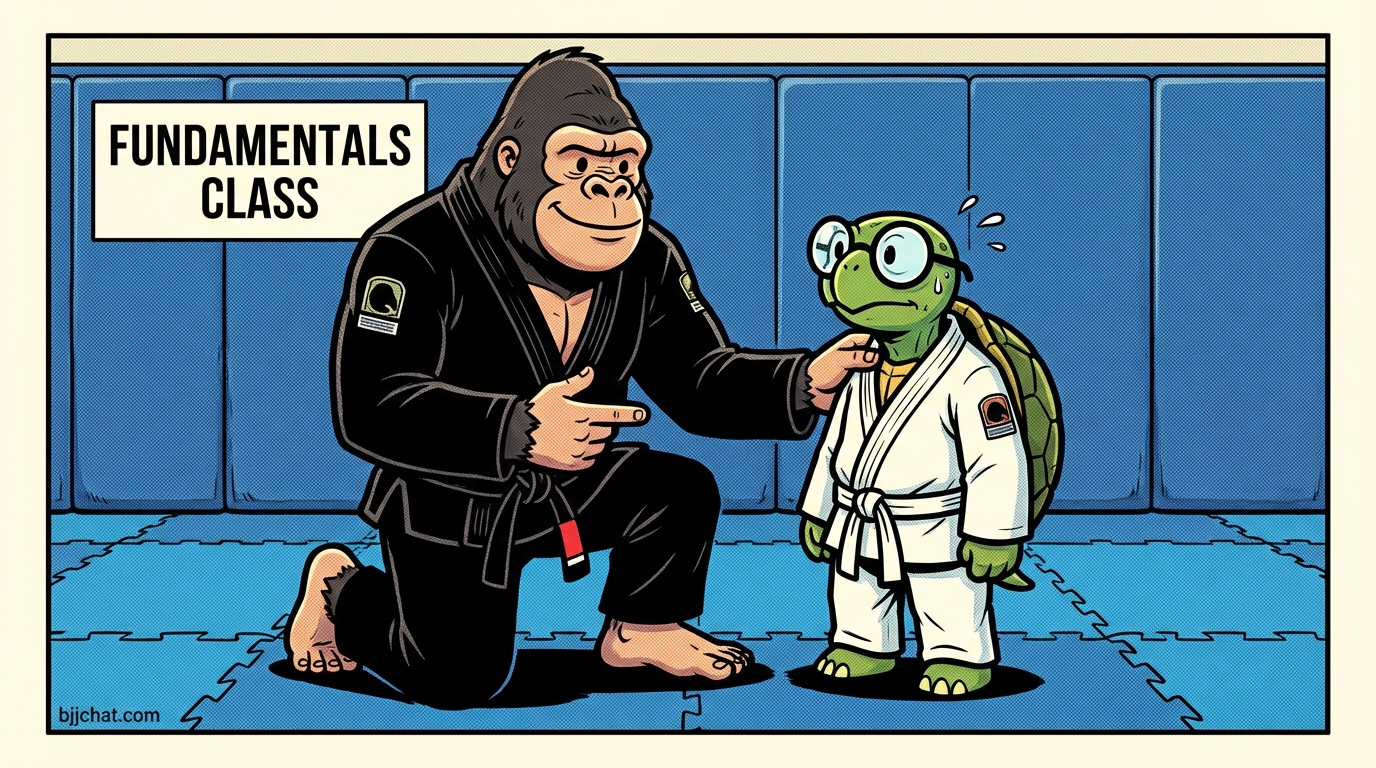
The best thing you can do during technique instruction is stay curious. Ask questions when you do not understand something. Watch how higher belts execute the movements. Try to understand the why behind each step, not just the what.
Most importantly, be a good training partner. Give appropriate resistance, communicate if something hurts, and help your partner learn by providing honest feedback. The person across from you is helping you get better—return the favor.
Your First Roll: Embrace the Chaos
Depending on the gym and the class structure, you might do some form of live sparring (called "rolling") on your first day. Some academies wait until students have a few classes under their belt. Others include controlled positional sparring in every beginner session. Many gyms use training games to make the transition to live sparring more approachable.
If you do roll on your first day, here is what to expect: beautiful, glorious chaos.
Nothing you learned in technique drilling will seem to apply. The other person will not stay still and let you work. You will end up in positions you do not recognize and have no idea how to escape. You might get submitted (tapped out) multiple times.
This is exactly how it should be.
Rolling is where you discover what jiu-jitsu actually feels like. It is problem-solving under pressure, a physical chess match where your opponent is actively trying to beat you. You will learn more from five minutes of rolling than an hour of drilling—not techniques necessarily, but lessons about base, balance, pressure, timing, and survival.
The tap is your friend. When you are caught in a submission, tap your partner or the mat twice. There is zero shame in tapping. It means you get to reset and try again. Refusing to tap risks injury and gains you nothing. The toughest competitors in the world tap dozens of times per training session.
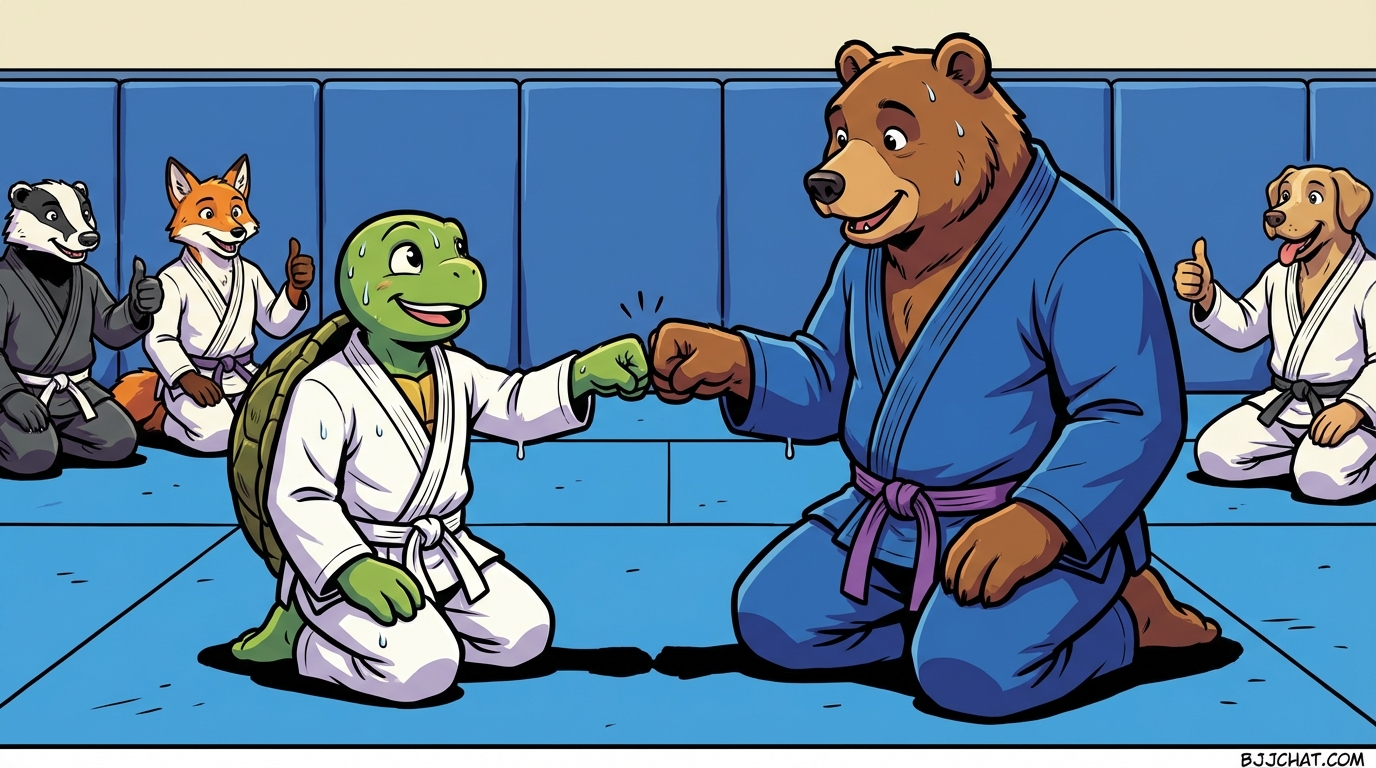
Survival is the goal. Do not worry about submitting anyone or executing techniques perfectly. Focus on breathing, staying calm, and protecting yourself. If you can survive a five-minute round without panicking, you have succeeded.
After Class: The Beginning of an Addiction
Class is over. You are drenched in sweat, breathing hard, and possibly questioning every life decision that led you to this moment. You might also feel something unexpected: exhilaration.
That post-training high is real. Something about the combination of physical exhaustion, mental engagement, and surviving a challenging experience creates a powerful sense of accomplishment. Many practitioners describe it as addictive—and they are not exaggerating.
Soreness is coming. Muscles you did not know existed will announce themselves over the next 48 hours. Your grips, neck, and core will feel particularly affected. This is your body adapting to new demands. The soreness decreases significantly after your first few weeks of consistent training.
Stay hydrated and eat well. Your body just worked harder than usual. Give it the fuel it needs to recover.
Process what you learned. You will not remember most of the techniques, but try to recall one or two key concepts. Write them down if it helps. Review instructional videos on those specific movements.
Most importantly, book your next class before you leave. The biggest predictor of success in jiu-jitsu is showing up consistently. Make a commitment to return while the experience is fresh.
Tips for Long-Term Success
Your first class is just the beginning. Here is how to build a sustainable jiu-jitsu practice:
Consistency beats intensity. Two classes per week for a year beats five classes per week for a month. Find a schedule you can maintain and protect that training time.
Ask questions constantly. Instructors and higher belts want to help you. No question is too basic. The student who asks "why" learns faster than the student who stays silent.
Be a good training partner. Show up clean. Communicate during drilling. Match your intensity to your partner's skill level. Thank people for rolling with you. Your reputation as a training partner affects how much people invest in helping you improve.
Embrace the white belt journey. You will be bad at this for a while. Accept it. The white belt phase is where you build the foundation for everything that follows. Do not rush it.
Take care of your body. Learn to differentiate between productive discomfort and injury warning signs. Rest when you need to. Address small issues before they become big problems.
Ready to Begin?
The hardest part of starting jiu-jitsu is walking through the door that first time. Everything after that—the confusing techniques, the exhausting rolls, the humbling moments—gets easier because you have already proven you have the courage to begin.
Your first BJJ class will not be pretty. You will feel lost, tired, and probably a little overwhelmed. You will also take the first step on a journey that transforms bodies, builds confidence, and creates lifelong friendships.
Everyone wearing a colored belt in your future gym started exactly where you are today. They walked through those doors nervous and uncertain, and they kept coming back.
Now it is your turn.
Looking for a BJJ gym that welcomes beginners? BJJChat helps academies create welcoming environments for students at every level, from first-day white belts to seasoned competitors. Find a gym that prioritizes your development and makes your jiu-jitsu journey as rewarding as possible.
About the Author

BJJChat Team
VariousEditorial Team
The BJJChat editorial team is a collective of Brazilian Jiu-Jitsu practitioners, coaches, and enthusiasts dedicated to sharing knowledge and helping the BJJ community grow. With combined experience spanning decades of training across multiple academies worldwide, our team produces content on platform updates, training tools, community features, and general BJJ tips. We are passionate about making quality BJJ education accessible to everyone, from white belts just starting their journey to experienced competitors looking to refine their game.
Ready to Track Your Progress?
Join practitioners who log their sessions and see real improvement over time.
Start Tracking
